

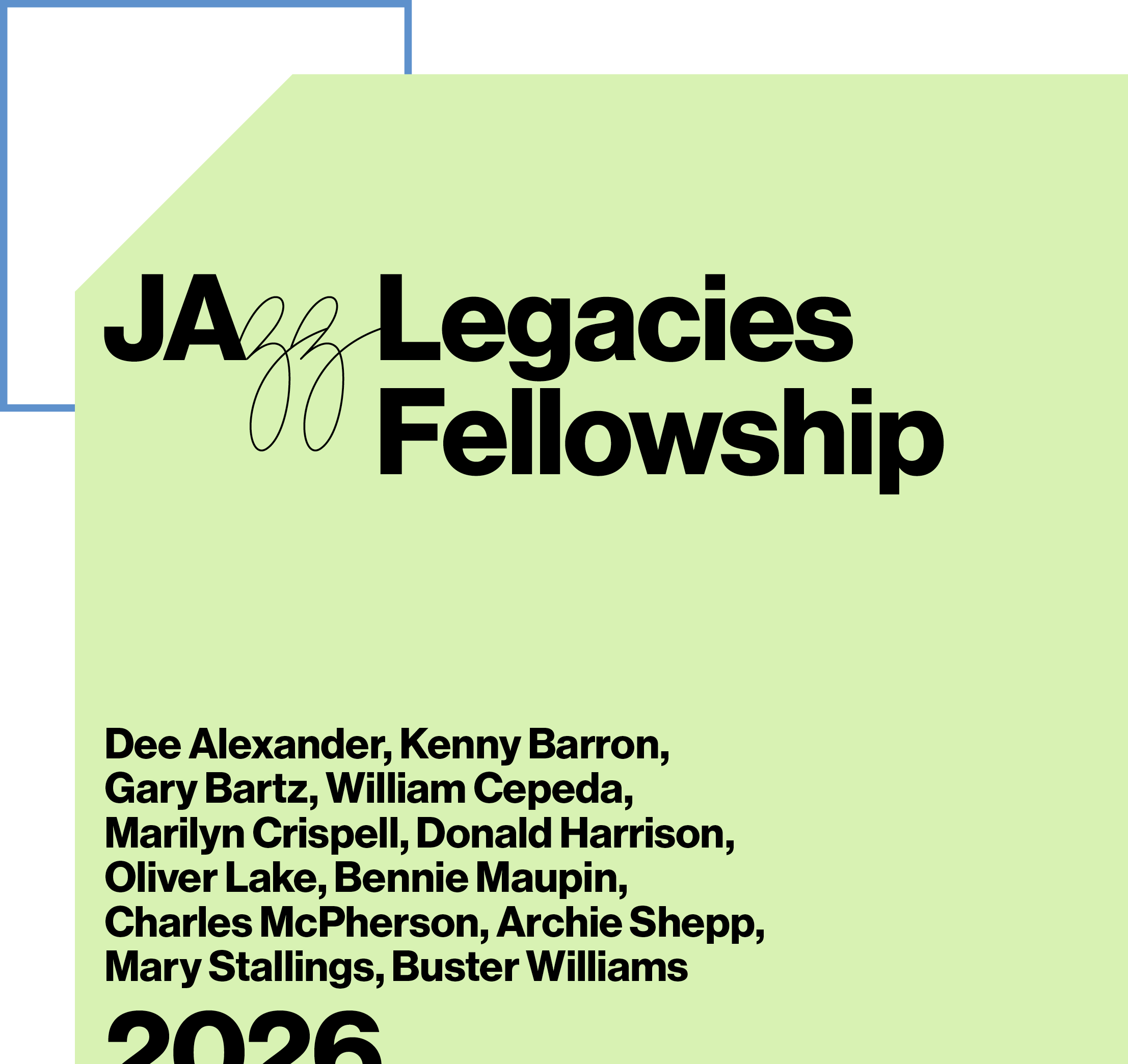
About the Jazz Legacies Fellowship
Initiated by the Mellon Foundation, the Jazz Legacies Fellowship will dedicate the next four years to supporting seasoned jazz musicians, aged 62 and over, by providing each recipient with a fellowship award of $100,000 in unrestricted funds and additional stipends for personal needs (i.e. housing, medical, and estate planning) and project support (i.e. tours, recordings, archiving, and teaching. Jazz Legacies Fellowship aims to foster a community of musicians approaching the latter stages of their careers with a measure of financial stability as they continue to explore their creative endeavors.

ABOUT
The Jazz Foundation of America (JFA)
The Jazz Legacies Fellowship is the centerpiece of a $35 million, multifaceted Mellon initiative aimed at supporting the cultural preservation of jazz, championing the legacy of the artists who have played a pivotal role in its formation, and strengthening the broader jazz ecosystem.
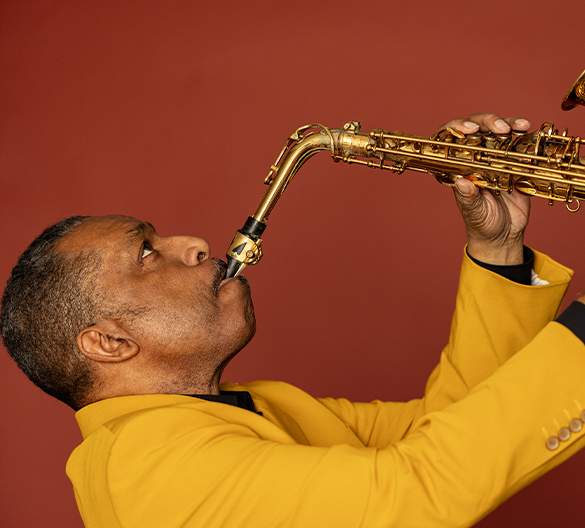
Meet the fellows
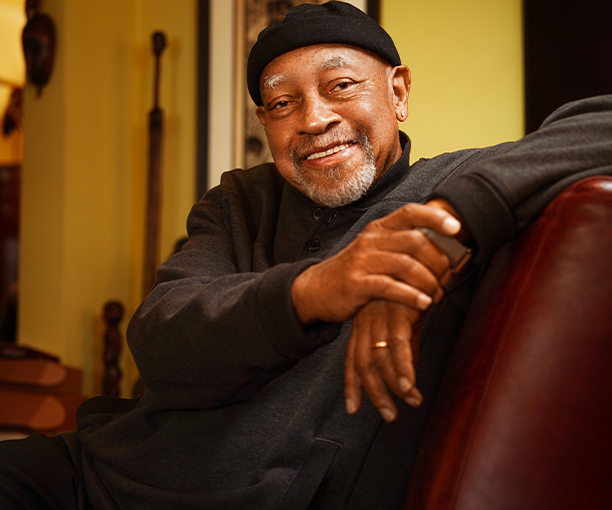
Kenny Barron
“You have to move the music forward, not backwards,” Kenny Barron said in 2024, looking back on a career spanning more than 65 years. “I mean, you can look back in retrospect and say, ‘Oh, that was great.’ But the music has to move forward no matter what.”
An esteemed elder of the music, the pianist boasts one of the most illustrious CVs of any living jazz musician, spanning work with Dizzy Gillespie, Freddie Hubbard, the co-operative group Sphere, Stan Getz and a bevy of legendary singers including Abbey Lincoln, Helen Merrill and Dianne Reeves. But he has also kept up with the latest developments in the music, working with rising stars such as Johnathan Blake and Immanuel Wilkins.
“I felt like I was being mentored,” he said recently when asked about working with Wilkins, “because he makes me play a different way.”
Growing up in Philadelphia alongside his older brother Bill, who would become a celebrated tenor saxophonist, Barron began piano lessons at age 6. Influenced early on by Hank Jones and Tommy Flanagan, he began gigging as a teenager and worked locally with Jimmy Heath and Yusef Lateef.
Barron moved to New York in 1961 and was soon working with top players such as James Moody, Lou Donaldson, Gillespie and Hubbard. In the ‘70s and ‘80s, he recorded extensively as a leader, debuting many original compositions, and co-founded Sphere, an all-star quartet that started out performing Thelonious Monk’s music and later explored original repertoire.
His close association with Getz began in 1986, lasting until the saxophonist’s death in 1991, and produced recordings including the seven-CD live duo set People Time. Barron’s recent recordings as a bandleader include celebrated titles such as Concentric Circles and Beyond This Place, both featuring Blake behind the drums, and respectively showcasing the talents of Dayna Stephens and Wilkins, saxophonists decades his junior.
In 2025, he realized a lifelong dream by releasing his first vocal-centered album, Songbook, which reimagined his original compositions with lyrics by Janice Jarrett. The many vocal luminaries featured on the album include Cécile McLorin Salvant, Kurt Elling, Ann Hampton Callaway and Tyreek McDole.
Barron taught for more than 25 years at Rutgers and was later an instructor at Juilliard. In 2014, he was named an NEA Jazz Master in 2014, and he has received 14 Grammy nominations throughout his career.
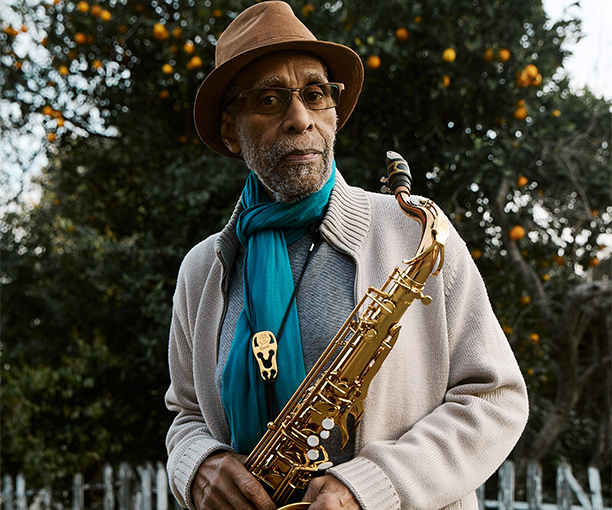
Bennie Maupin
In the summer of 1970, Herbie Hancock’s band was in need of a new saxophonist when bassist Buster Williams made a suggestion: “Call Bennie Maupin.”
“Everybody knew that Bennie was a great musician,” Hancock later said, citing Maupin’s work with Horace Silver, Lonnie Smith and McCoy Tyner, as well as his appearance on Miles Davis’ game-changing Bitches Brew, and his “whole arsenal of woodwind instruments.”
“With Bennie,” Hancock added, “we could get all kinds of different textures and colors, far beyond just the sound of the standard saxophone and clarinet.”
It’s enormously telling that two of the most forward-thinking bandleaders in jazz, Davis and Hancock — who was then putting together his so-called Mwandishi sextet — would think of Bennie Maupin just as they were embarking on some of their most adventurous musical voyages. For around 60 years, Maupin has been lending color to the work of various jazz legends while appearing on a slew of classic recordings: not just Bitches Brew but also Miles’ On the Corner, as well as Hancock’s smash-hit Head Hunters, and his own marvelous ECM favorite The Jewel in the Lotus.
“I grew up ‘round rhythm,” Maupin has said of his upbringing in Detroit. “Lots of it. Gospel, classical, jazz and the blues.” Maupin picked up saxophone early, after he heard a neighbor playing, and studied at the Detroit Institute of Music. He also learned from Larry Teal, longtime saxophonist for the Detroit Symphony Orchestra.
“Taking lessons from him on a weekly basis was a big deal,” Maupin later said of Teal. “He was very firm about how to produce the sound and where your instrument should be.”
His career took off after the Four Tops offered him a New York gig, which led to recordings with Marion Brown, Freddie Hubbard, Silver, Tyner and more.
Maupin eventually moved to the L.A. area, where he worked as a session musician. He began recording as a leader in 1974 and has since released a number of acclaimed albums, including 2006’s Penumbra, which one reviewer called a “magical, labyrinthine outing for Maupin,” adding that “Maupin and band are positively beatific in their subtlety.”
Today, Bennie Maupin remains an L.A. mainstay. In 2024, he reunited with Hancock and the Head Hunters band at the Hollywood Bowl, where, one reviewer noted, he “made a meal out of his sax solo” on the beloved tune “Sly.”
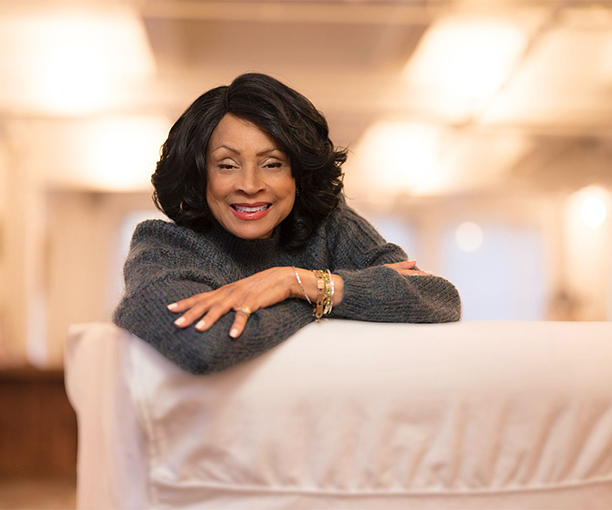
Mary Stallings
“There’s no woman alive that sings jazz as great as Mary Stallings,” the pianist Eric Reed, a close collaborator of the veteran vocalist, has said, adding that “if you want to talk about jazz, and the subtleties and the intricacies, the storytelling and the harmonies, there isn’t a woman alive who sings better.”
And aficionados have strongly agreed. “Listening to her sing today,” a New York Times writer once noted of Stallings, after she had returned to performing following a long break from the scene, “the signature sounds of jazz song greats throughout history seem to surface and recede, blended in a thoroughly individual vocal style.”
Stallings’s long, winding journey through the music, which has taken her from young prodigy to esteemed elder across more than 60 years, began in San Francisco. She sang in church and then started performing and touring as a teenager. In 1962, she released her first album, performing along the vibraphonist Cal Tjader, and she went on to work with legends including Dizzy Gillespie, Billy Eckstine and Count Basie. But in the early ‘70s, frustrated with music-business politics, she took a break from the scene and raised a daughter.
When she returned to music at the end of the ‘80s, she made up for lost time, and she has worked steadily ever since, performing and recording frequently, and finally encountering the appreciation that she was due all along.
“If you have music in you, it’s going to be heard,” Stallings has said, reflecting on the ups and downs of her career. “You’ll have a career if you just stick to it.”
Stallings also feels that time has deepened the impact of her art. “As you get older, you lose some of your chops,” she noted. “But your storytelling takes over, because you’re speaking of your life’s experiences. It deepens. And that’s what it’s supposed to be about — telling stories in your music.”
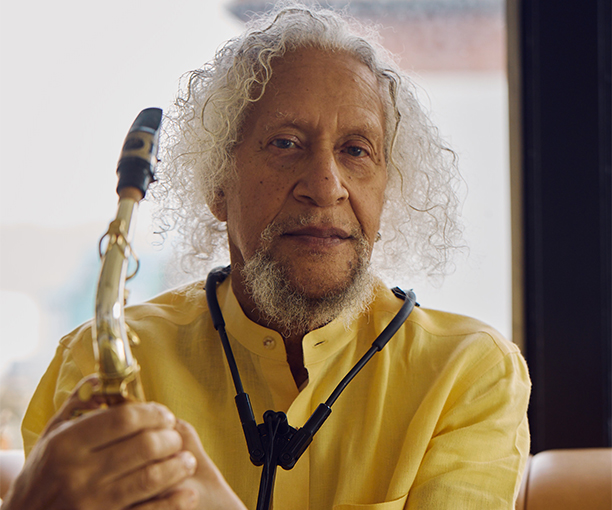
Gary Bartz
Gary Bartz has made no secret of his belief in music as a higher power. “Music brings people together,” he has said. “It’s in the church — and it’s in the church for a reason. Music is the most powerful religion ever, and if we ever accept it formally, I think it would heal a lot of things.”
Bartz’s strong convictions about the healing and unifying power of sound have helped make him one of the key saxophonists and creative minds in jazz across more than 50 years. During that time, he has made key contributions to the bands of Miles Davis, McCoy Tyner and others, founded his own game-changing NTU Troop and forged connections with the younger generation via his work with the Jazz Is Dead label.
Growing up in Baltimore, Bartz gravitated strongly to the saxophone after first hearing Charlie Parker at age 6. He later characterized the sound as “the most beautiful thing I’d ever heard.”
Bartz began playing at age 11 and his father, who owned a local jazz club, took him to hear many musical greats such as John Coltrane and Benny Golson. He sat in with Sonny Stitt and met Max Roach, whose band he would later join after moving to New York in 1958 to attend Juilliard and soak up the scene. Once in town, he also worked with Charles Mingus’s Jazz Workshop. He would also return home often to perform at his father’s club, which led to a key gig with Art Blakey’s Jazz Messengers.
Later Bartz joined Tyner’s band and Davis’s electric band, appearing on the incendiary Live-Evil LP. Observing the way that Roach and Mingus wove forthright social critique into their work, he was inspired to form his own NTU Troop. “I saw that you can address social ills through music,” he later said.
Bartz has recorded more than 40 albums as a leader — including one with the celebrated Jazz Is Dead team of producers Adrian Younge and Ali Shaheed Muhammad, the latter of whom was a member of A Tribe Called Quest — and hundreds as a sideman. He has also been on the Oberlin Conservatory of Music Faculty since 2001. Throughout his journey, he has maintained a strong belief in the transcendent power of music.
“Not just musicians, but any artists, are very dangerous to people who want to control,” Bartz has said. “They’re dangerous because they don’t conform. They think for themselves.”
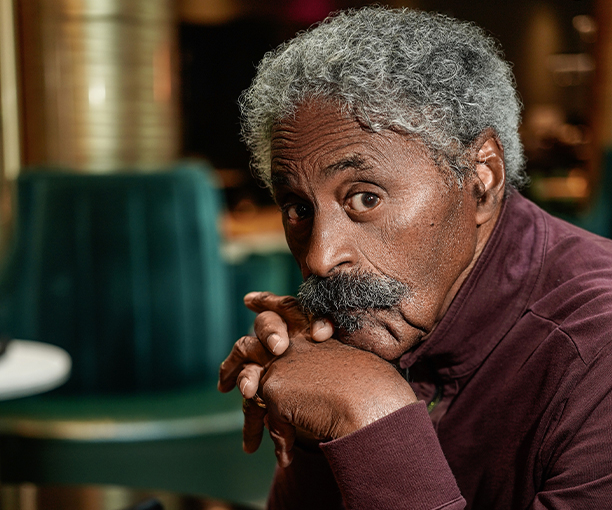
Charles Mcpherson
As one of the foremost living purveyors of the bebop tradition, alto saxophonist Charles McPherson has not only honored his roots — he’s augmented and furthered them.
Born in Missouri, McPherson relocated to Detroit during childhood, and at age 15 began studying with pianist Barry Harris, one of the most crucial teachers of the bebop language. For the young saxman, Detroit was a crucible, where he forged his sound alongside musicians such as the saxophonist Donald Walden, and drummers Louis Hayes and Roy Brooks.
In 1959, McPherson relocated from Detroit to New York. For the next 12 years, he performed with the great Charles Mingus, while keeping the collaborative lines open elsewhere, working with saxophonist George Coleman; trumpeters Lonnie Hillyer, Art Farmer and Carmell Jones; bassist Nelson Boyd; and drummer Albert “Tootie” Heath.
In 1972, McPherson parted ways with Mingus; from then on, he kept up a busy schedule as a leader and sideman. In 1978, he relocated from New York to San Diego; a decade later, he channeled Charlie Parker in the soundtrack to Clint Eastwood’s 1988 biopic Bird.
In 1996, The New York Times reported that “Mr. McPherson’s attack has grown more aggressive, and his tone has gained so much depth that at times he can sound like he’s playing a tenor saxophone … zig-zagging through be-bop filigrees, punching out blues lines and hooting warmly in the high register.”
Widely recognized as a prolific composer, McPherson was Resident Composer for the San Diego Ballet, composing three original suites for the company, as well as two chamber music arrangements. His 2020 album Jazz Dance Suites is a compilation of two multiple-movement suites, Sweet Synergy Suite and Song of Songs, plus a movement from the string chamber work Reflection, Turmoil & Hope. DownBeat recognized Jazz Dance Suites as one of the best jazz recordings of the year.
Among McPherson’s dozens albums as a leader are 2024’s Reverence.
Of the album, one reviewer wrote:
“Over 60 years into his career, McPherson ascended the ranks of jazz master long ago, and finds his own creative voice alongside the work of his idols Barry Harris and Charlie Parker. Reverence honors that journey, and McPherson plays with the kind of hard-swinging, cogent improvisational style that echoes their spirit.”
In 2026, McPherson will be a featured guest on trumpeter Brian Lynch’s album Torchbearers.
A clinician at educational centers the world over, McPherson has received an honorary Doctor of Fine Arts degree from CSU San Marcos in 2015, the Don Redman Jazz Heritage Award and “The Duke” Award from Soka University.
“I’d like to think that I’m better now!” McPherson stated in 2020. “In my estimation, the improvement manifests in a deeper understanding of harmony, and its usages. My technique may be better. I feel more comfortable taking chances. I know the reason for a particular note at a particular time. I love to play just as much as ever.”
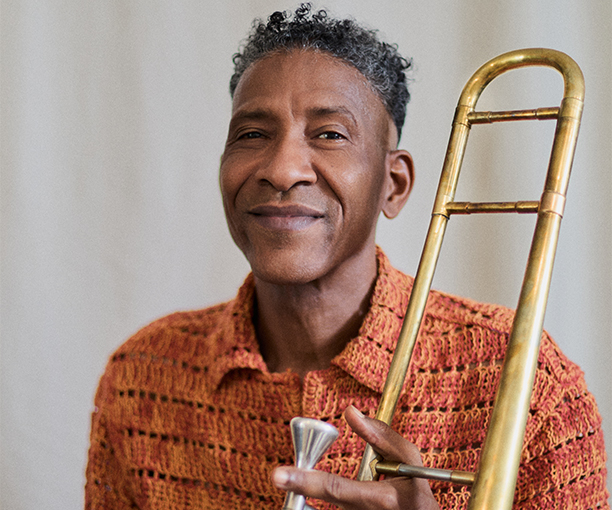
William Cepeda
The New York Times once wrote that trombonist, composer, and educator William Cepeda has “made it his business to point out the connections between jazz and Afro-Caribbean roots.”
Dr. William Cepeda is a cultural icon, multifaceted musician, educator and visionary whose life’s work has been dedicated to illuminating the rich tapestry of Puerto Rican music. A master trombonist and conch-shell player, he is also a prolific composer, arranger and producer. Cepeda has carved a unique and influential niche by exploring and elevating the often-overlooked realm of Afro–Puerto Rican jazz.
A four-time Grammy-nominated artist, Cepeda is a member of the world-renowned Cepeda Family, one of Puerto Rico’s most distinguished Afro–Puerto Rican folkloric music institutions.
Cepeda’s musical journey began at the age of 10 in his hometown of Loíza, widely known as the heart of “Little Africa” in Puerto Rico. In the early 1980s, he created an innovative musical hybrid he named Afro-Rican Jazz, a groundbreaking fusion of traditional Puerto Rican roots with jazz and global influences.
“I created Afro–Puerto Rican jazz because no one had created it before,” Cepeda has said. “I developed a different taste, different fusions. I wanted to develop something that showed where I come from.”
In 2002, Cepeda’s vision expanded with the formation of the Afro–Puerto Rican Big Band Jazz Orchestra, a 22-piece ensemble featuring some of Puerto Rico’s finest musicians. This orchestra released the seminal album The Sound of Puerto Rican Jazz in 2024, an inventive work that fuses traditional genres such as bomba, plena, la danza and música jíbara with jazz, world music and other global influences. The album pays homage to Puerto Rico’s African heritage while forging a bold new musical path. In 2025, The Sound of Puerto Rican Jazz was recognized as one of the Top 20 productions of the year by the National Foundation for Popular Culture.
Starting on percussion as a child, Cepeda began playing trombone in his teenage years. In 1980, he studied at Berklee College of Music in Boston, and in 1993 he earned a Master’s Degree in Jazz Performance from the Aaron Copland School of Music at Queens College, New York. In 2013, he was awarded an Honorary Doctorate from Berklee College of Music. In 2024, Cepeda was named Cultural Ambassador by the Puerto Rico Institute of Culture.
Cepeda has received grants from organizations including the American Composers Orchestra, American Composers Forum, Chamber Music America, Meet the Composer, Museo de Arte Contemporáneo, Instituto de Cultura Puertorriqueña, South Arts, the Association of Hispanic Arts and the Latino Arts Advancement Program.
Throughout his career, Cepeda has traveled worldwide performing with legendary jazz and Latin artists, including Dizzy Gillespie, Lester Bowie, David Murray, Bobby Watson, and Miriam Makeba. In the Latin music world, he has collaborated with iconic figures such as Tito Puente, Paquito D’Rivera, Eddie Palmieri, Celia Cruz and Marc Anthony.
Cepeda’s oeuvre also includes contemporary classical music, notably his creation of Bomba Sinfónica, a full-length orchestral work blending classical composition with traditional Afro–Puerto Rican folkloric rhythms and sounds. He has released multiple albums on his independent Casabe Records label dedicated to documenting traditional Puerto Rican music.
Committed to education and cultural preservation, Cepeda founded a group called Melodía Taína, an innovative conch-shell choir for children and youth honoring Puerto Rico’s Taíno ancestors.
His most recent publication project is a four-volume encyclopedia, Puerto Rican Music: Roots and Beyond, which includes performance and educational components, workshops, and master classes dedicated to Puerto Rican musical genres such as bomba, plena, la danza and música jíbara.
Cepeda’s Afro-Rican Jazz style stands as an enduring and unprecedented innovation.
“Nothing like this has been done before,” he has said. “While there are many great jazz albums inspired by Cuban rhythms, there has not been anything of the same caliber for Puerto Rican music and jazz. And there should be. This music is about my people and for my people.”
He has long stated that when Puerto Rican people understand the value of their music and folklore, they will fight with great force to defend their honor.
William Cepeda is always experimenting and will continue creating new music for years to come. He continues inspiring and enlightening audiences worldwide through his music, showcasing the vibrant and complex beauty of Afro–Puerto Rican culture.
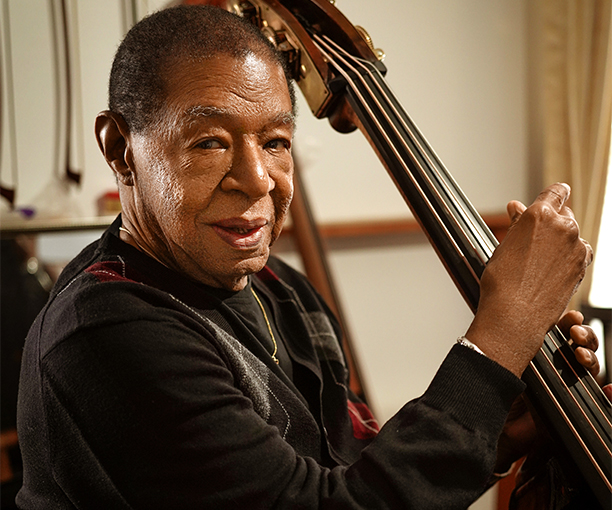
Buster Williams
After more than six decades at the forefront of jazz, Buster Williams still maintains a sense of wonder.
“The greatest thing that a musician can do is surprise him- or herself,” the eminent bassist, and Buddhist practitioner for 50-plus years, said in a recent interview. “‘You keep exploring, and through this exploration you find new answers, create new problems, you find that your whole perception of yourself changes — and the world broadens.”
Williams has made a career out of broadening worlds, both his own and those of the many esteemed musicians he has worked with. His epic CV includes a lengthy stint with Herbie Hancock, in the famed Mwandishi sextet; work with legendary singers including Nancy Wilson, Betty Carter and Sarah Vaughan; a prolific tenure with Sphere, a co-operative band inspired by Thelonious Monk; and a role in the band led by fellow bass luminary Ron Carter.
Williams grew up in Camden, New Jersey, learning music from his bass-playing father. As a teenager, he began working with Jimmy Heath, and soon after graduating high school, he went on the road with Gene Ammons and Sonny Stitt. Touring with Vaughan followed, and a gig with Wilson that led him to the West Coast, where he worked with the Jazz Crusaders and Miles Davis, and on various movie, TV and studio dates.
His work with Hancock remains highly influential. “If Buster did nothing else in his career, you could just use his work in Mwandishi—the band swung, was funky, was acoustic, was electric, was spiritual, was socially conscious—to show what an advanced yet rooted musician he was,” fellow bassist Christian McBride has said.
Work on film soundtracks followed, as did extensive work as a bandleader, spanning more than 50 years. “Buster Williams takes listeners on a soul-stirring journey that blends musical expertise with philosophical introspection,” wrote one reviewer of Williams’s most recent album, Unalome, named after the path of enlightenment pursued in Buddhism.
Along with the respect he has garnered from fans and fellow musicians, Williams has received grants from the National Endowment for the Arts and the New York Foundation for the Arts. In 2024, he was honored by his hometown with an induction into the Camden Walk of Fame.
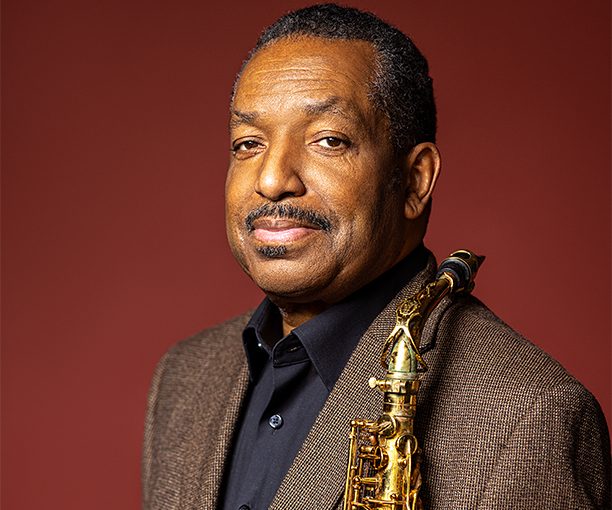
Donald Harrison
Donald Harrison has not only paid homage to his New Orleans roots; he has expanded on them. As the son of late folklorist Donald Harrison Sr. — the Big Chief of four NOLA Afro-New Orleans cultural groups — Donald Harrison grew out of local second-line and tribal culture and went on to fuse jazz with R&B, hip-hop, rock, and soul, in a synthesis he dubbed “Nouveau Swing.”
An advocate and mentor, Harrison created employment opportunities for local musicians following Hurricane Katrina. Today, he is the recognized Big Chief of Congo Square in Afro-New Orleans culture and was made a Chief in 2019 by Queen Diambi Kabatusuila in the Democratic Republic of Congo.
Harrison was born in the Big Easy in 1960. His jazz education began when he studied saxophone with the late Edward “Kidd” Jordan. He went on to attend Berklee College of Music and play in the bands of Roy Haynes and Jack McDuff — as well as, momentously, Art Blakey’s Jazz Messengers.
While working with Blakey, Harrison started a group with trumpeter Terence Blanchard because Blanchard told Harrison he did not want to go against Wynton Marsalis by himself. They left the Messengers, and in the mid-’80s, recorded albums like 1984’s New York Second Line, 1986’s Nascence and 1988’s Black Pearl as the Terence Blanchard/Donald Harrison Quartet. In 1991, Harrison released a Blakey tribute album, For Art’s Sake. Nouveau Swing, from 1993, cemented his expansive musical concept.
In 2005, Harrison recorded the first multi-genre singles. The concept showcased three recordings of the same music played in three different styles: modern acoustic jazz, soul music and hip-hop. In 2008, he began working with quantum physicists and, on his recording Quantum Leap, discovered how to compose music based on relativity and quantum four-dimensional space-time. His recent recording, The Magic Touch, is one song recorded in 10 different styles, including post-bop, salsa, blues, bossa nova, New Orleans second-line, roots reggae, soul/smooth jazz, chill trap hip-hop and Afro-beat, with the last version mixing the other nine versions into a coalesced Nouveau Swing modern-jazz version.
Harrison founded the Congo Square Nation Afro-New Orleans Cultural Group, to honor the site where slaves were formerly allowed to sing and dance in public. He has also served as artistic director and educator for the nonprofit, after-school Tipitina’s Foundation’s Internship Program, which helps New Orleans high school students get a foot in the door of the music industry. In 2022, he was justly named an NEA Jazz Master.
“This music that we call jazz is one of the greatest achievements in the history of mankind,” Harrison once said. “The music is saying, ‘Work as hard as you can.’ The music is saying, ‘Give everything you got.’”
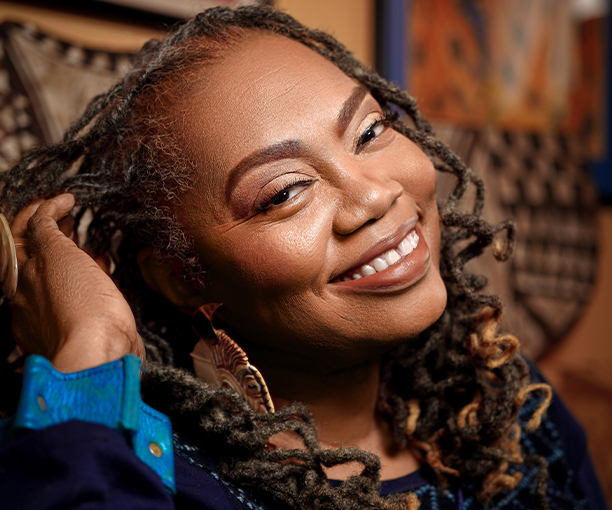
Dee Alexander
“If you had to name one artist who’s the face of jazz in Chicago, it probably would be singer Dee Alexander,” the Chicago Tribune once noted. “For when Alexander takes the stage, she represents so much of what listeners around the world identify with Chicago jazz: fearless innovation, respect for tradition and irrepressible creativity.”
Active across gospel, blues, R&B, spontaneous improvisation, world and other styles, Alexander has taken advantage of the richness of Chicago’s musical scene, also gaining membership in the storied experimental collective the AACM (Association for the Advancement of Creative Musicians). In addition to her own projects, she has worked and recorded with luminaries including Ramsey Lewis, Hamid Drake, Ernest Dawkins, Isaiah Collier and Malachi Thompson.
Born in Chicago, she found jazz through her mother, who would play records by Sarah
Vaughan, Billie Holiday, Ella Fitzgerald and other vocal greats around the house. In school, she sang in musicals, and during the holidays, she toured internationally with gospel group Sue Conway and the Victor Singers. The local multi-instrumentalist “Light” Henry Huff became a key mentor and collaborator.
“He encouraged me to take risks and cross boundaries which put me on the path to becoming an accomplished voice improviser,” Alexander later said. “He was one of my greatest influences.”
Alexander is featured on several recordings on the Delmark label, including Malachi Thompson’s 47th Street (1997), Rising Daystar (1999) and Blue Jazz (2003); Corey Wilkes’s Drop It (2008); and the Metropolitan Jazz Octet’s It’s Too Hot for Words: Celebrating Billie Holiday (2019). Other albums featuring Alexander include Hear in Now (Mazz Swift, Tomeka Reid, Silvia Bolognesi), Not Living in Fear (International Anthem, 2017); Ramsey Lewis and the Urban Knights, VII (Ropeadope, 2019); Chicago Soul Jazz Collective, On the Way to Be Free (2022); Isaiah Collier & the Chosen Few, The Almighty (Division 81, 2024); Emma Dayhuff, Innovations & Lineage: The Chicago Project (Division 81, 2025); and Ernest Dawkins, New Horizons Redux: 12-13-14-25-46: 45 Years of Great Black Music (Live the Spirit Residency 2025)
In 2008, Alexander released Wild as the Wind (BluJazz), which received a five-star review from Downbeat. Evolution Ensemble, Sketches of Light (Egea, 2014) followed, celebrating the music of her mentor Huff. Later, she returned to her roots, recording a set of — as the title indicated — Songs My Mother Loves (BluJazz 2014), including classics associated with Abbey Lincoln, Holiday and other legendary singers.
“While Dee Alexander is rightly viewed as a musical treasure in her hometown of Chicago, albums like this … should go a long way in expanding her reach,” one reviewer wrote of the project.
Alexander is currently a host on the nationally syndicated WFMT Jazz Radio Network.
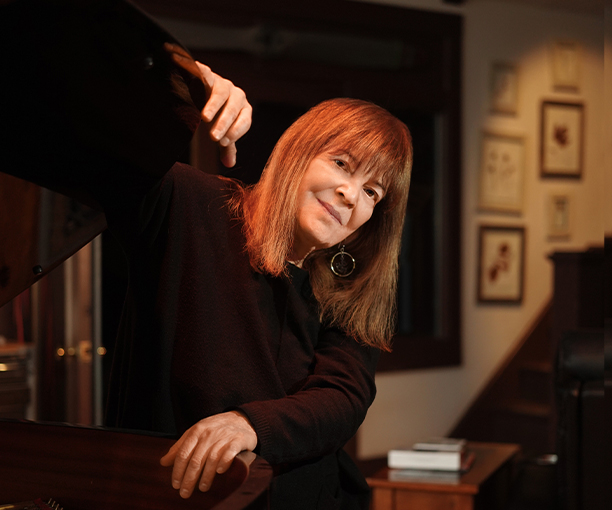
Marilyn Crispell
Of the many pianists to make a mark in avant-garde jazz during the past 50 years, few have had as profound an impact as Marilyn Crispell.
Born in Philadelphia, Crispell grew up in Baltimore, and studied classical piano at the illustrious Peabody Institute. She continued her education at New England Conservatory, taking in both avant-garde and baroque styles, but she experienced a key epiphany a few years later when she came across John Coltrane’s A Love Supreme.
“The emotional and spiritual quality of it overpowered me,” she later said of her first exposure to the album. “I can honestly say it’s possibly the most overpowering experience I’ve ever had in my life.”
Soon after, a visit to the Creative Music Studio, the musical hub founded in Woodstock in 1971 by Karl Berger, Ingrid Sertso and Ornette Coleman, introduced her to key later collaborators including Anthony Braxton. From the early ‘80s through the early ‘90s, she was a consistent and integral member of Braxton’s working quartet, one of the most celebrated bands of the era.
“The concepts and strategies at play in this quartet have influenced a couple of generations of ambitious composers and improvisers,” NPR once wrote of the group.
In the ‘80s and ‘90s, she worked extensively in a band led by the eminent bassist Reggie Workman, an experience that she has cited as profoundly influential on her own music.
Crispell’s vast discography as a leader includes high-energy free jazz and spacious, lyrical trio collaborations with drummer Paul Motian, featuring Gary Peacock or Mark Helias on bass.
Reflecting on the evolution of her style, she said in 2019, “I felt like I was involved in this very male world, and that I couldn’t afford to show any insecurity or softness. Things have changed a lot and as time went on, as I got older and had a lot more experiences, it was natural to do things in service of the music and not my personal ego.”
In recent years, she has forged alliances with younger artists such as Tyshawn Sorey and Angelica Sanchez and worked steadily with Joe Lovano in the enchanting Trio Tapestry. She received a Guggenheim Fellowship in 2005 and in 2025 was named an NEA Jazz Master.
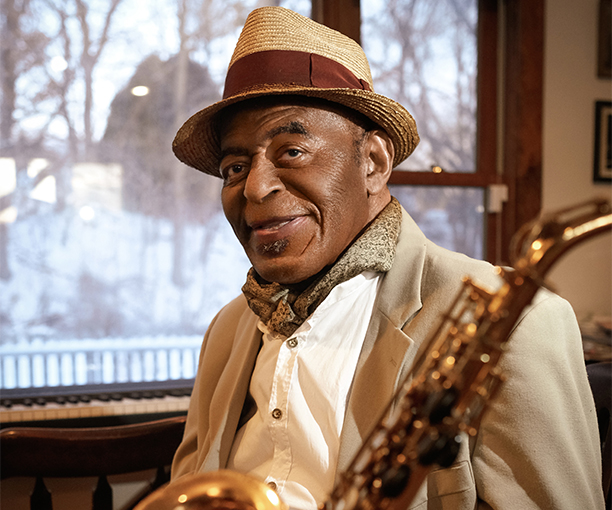
Archie Shepp
Archie Shepp stands as perhaps the most prominent living link to the dawn of avant-garde jazz in the early ‘60s, a figure with direct ties to giants such as John Coltrane and Cecil Taylor. But that period marks only the beginning of Shepp’s monumental contribution to American music, which includes stirring statements of protest, a deep engagement with the blues and spirituals, and a staunch commitment to education.
“Archie has spent his life examining the tight relationship between America and the sounds it produces,” the pianist Jason Moran has said. “He has followed the music around the world, continually looking for the intersections of struggle that informs his music. He finds meeting-places in the music, which breeds profound conversations from the musicians he performs with.”
Shepp’s story began in Philadelphia, where he started out playing banjo with his father, and then moved to saxophone and piano. He studied drama at Vermont’s Goddard College and was initially dedicated to playwriting, but meeting Cecil Taylor shortly after his move to New York in 1959 cemented a focus on music. Working with Taylor, Shepp has said, “made you question things” and led him toward the cutting edge of jazz: Soon he would co-found the New York Contemporary Five and record with John Coltrane on albums such as Ascension.
In later years, Shepp’s concept expanded, inspired in part by the urging of his mother, to include the blues and spirituals and other expressions of his African American heritage. His mature work — such as the celebrated Attica Blues, inspired by the 1971 Attica Prison riot — also made strong political statements, echoed in more recent albums such as Let My People Go. He transmitted similar messages in the classroom, teaching courses on Black music at UMass Amherst, and in collaborations with like-minded artists such as Chuck D.
When asked in 2021 what he hoped his legacy would be, Shepp replied: “That I tried. That a number of my works are dedicated to the ideas I believed in, and my efforts to express the sound of the blues and protest.”
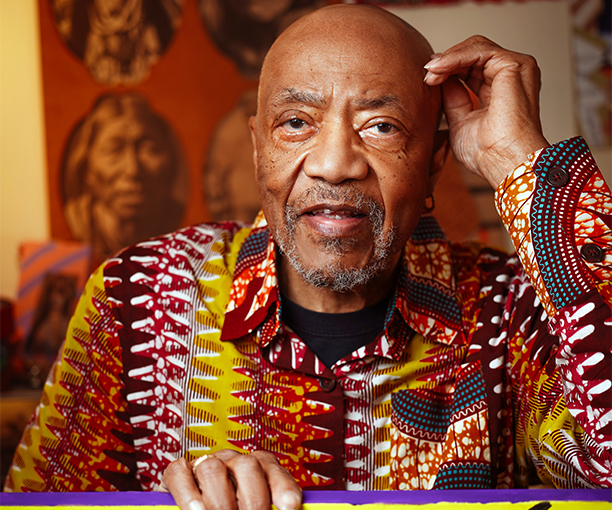
Oliver Lake
“The sound from my saxophone has the line of the blues going throughout everything I do,” Oliver Lake has said. For the past 50-plus years, working with his own projects, and celebrated collectives such as the World Saxophone Quartet and Trio 3, Lake has brought that blues feeling into everything he does, unifying avant-garde jazz, contemporary classical music and more.
Born in Arkansas, Lake moved to St. Louis as a child. He started as a visual artist and then moved on to playing percussion in drum and bugle corps. He picked up saxophone, and, inspired by the influence of Chicago’s AACM collective, Lake and friends and fellow musicians including Julius Hemphill, Hamiet Bluiett, Floyd LeFlore and Baikida Carroll joined together with poets, visual artists and stage directors to form the Black Artists Group, or BAG, putting on concerts and productions around St. Louis.
“I always refer to [BAG] as my school — each week I experienced different ways of expressing myself,” Lake later said. “Working with dancers, poets, actors, musicians and visual artists influenced me in all my artistic endeavors.”
Lake later moved to New York and began recording frequently under his own name. In the mid-‘70s, he, Bluiett, Hemphill and David Murray banded together as the World Saxophone Quartet, which would remain together in various forms for decades.
“No one has ever played four saxophones with the ferocity and feeling of the World Saxophone Quartet,” The New York Times once wrote. “Unamplified, they can command a concert stage or blow the doors off a jazz club.”
Lake also co-founded Trio 3 — another long-running group, with bassist Reggie Workman and drummer Andrew Cyrille — penned vocal works and classical pieces, and worked as a sideman for Björk, Billy Hart, Lou Reed, Meshell Ndegeocello and Abbey Lincoln.
As Lake once noted, reflecting on his broad CV, “audiences can feel when you’re making an honest communication. I don’t think the style of what you’re doing really matters. It’s just whether…people can feel if it’s coming from your heart.”
Meet the team

Veronika Châtelain
Châtelain serves as the Program Director of the Jazz Legacies Fellowship at the Jazz Foundation of America, leading a five-year initiative that honors jazz artists whose contributions to global culture have long been overlooked. Before joining the Jazz Foundation, she worked at Open Society Foundations, where she led the Global Initiative for the Restitution of African Cultural Heritage, advocating for the return and protection of objects looted from Africa. With over a decade of experience in creative communities, her focus has been on cultural preservation through deep engagement with artists, storytellers, and creatives who challenge harmful narratives about Global South communities. As an arts leader, strategist, and public programs director, Veronika has developed innovative programs that support artists and art organizations. She has collaborated with the African Union, ECOWAS, the United Nations, heads of state, and global philanthropies, championing Caribbean and African diasporic art while working alongside activists to confront systemic racism and distorted histories through critical engagement, art, and entertainment.
Anne M. Foerg
M. Foerg is a licensed geriatric social worker with over two decades of experience supporting elders and their caregivers. She joined the Jazz Foundation of America in September 2024 after serving as the Associate Executive Director for Older Adult Services at Queens Community House, overseeing community-based programs funded by the NYC Department for the Aging. Previously, Anne directed the Penn South Program for Seniors, the first Naturally Occurring Retirement Community Supportive Service Program (NORC-SSP), which helped older adults age in place. She also served as the Director of Social Work at CaringKind, specializing in dementia care and supporting families navigating elder care challenges. Anne began her career in case management at Hartley House and Lenox Hill Neighborhood House. She holds a BA in Metropolitan Studies from New York University and an MSW with a focus on aging from the Silberman School of Social Work.


Seth Abramson
Grammy Award-winning producer Seth Abramson is the founder and President of Rabbit Moon Productions, Inc. and the Director of Jazz for The Gilmore in Kalamazoo, MI. Previously, he served as the founding Artistic Director of the Jazz Standard in New York City for over 20 years and led music programming for events like The Big Apple Barbecue Block Party. Before his production career, Abramson worked at major record labels and represented jazz legends such as Abbey Lincoln and Terence Blanchard. During the pandemic, he adapted to virtual events and concerts for organizations like NJPAC and UMass Amherst Fine Arts Center. He has produced thousands of concerts featuring artists like Wynton Marsalis and Jon Batiste and has helped launch the careers of Grammy winners and MacArthur Fellows. He won a Grammy for *The Mingus Big Band Live at Jazz Standard* and was nominated for *Flamenco Sketches* with Chano Dominguez. A musician himself, Abramson studied piano and guitar and has performed with notable artists. He graduated cum laude from New York University and frequently lectures at prestigious music schools and conferences.
Parris Lewis
Parris Lewis is a performer, writer and educator who obtained a bachelors in Music Education k-12 from Bethune-Cookman University. Since 2016 Lewis has spent part of their time facilitating arts programming within the NYCDOE and the Future Music Project at Carnegie Hall as an arts administrator and teaching artist within the Juvenile Justice System. Lewis recently joined the Jazz Foundation of America and looks forward to the being of service to our Jazz Legacy Fellows. Lewis also has contributed libretto in Del’Shawn Taylor’s “We Wear the Mask” making its Kennedy Center debut in fall 2025 and has also collaborated with ColemanCollective, Alessandra Corona Performing Works, The Playwrights Workshop with Josh Wilder and Betty’s Daughter Arts Collaborative . In performance, Lewis is most notably known for playing Tina Turner in the 1st National Tour of Tina! The Tina Turner Musical. She is the Program Manager for the Jazz Legacies Fellowship
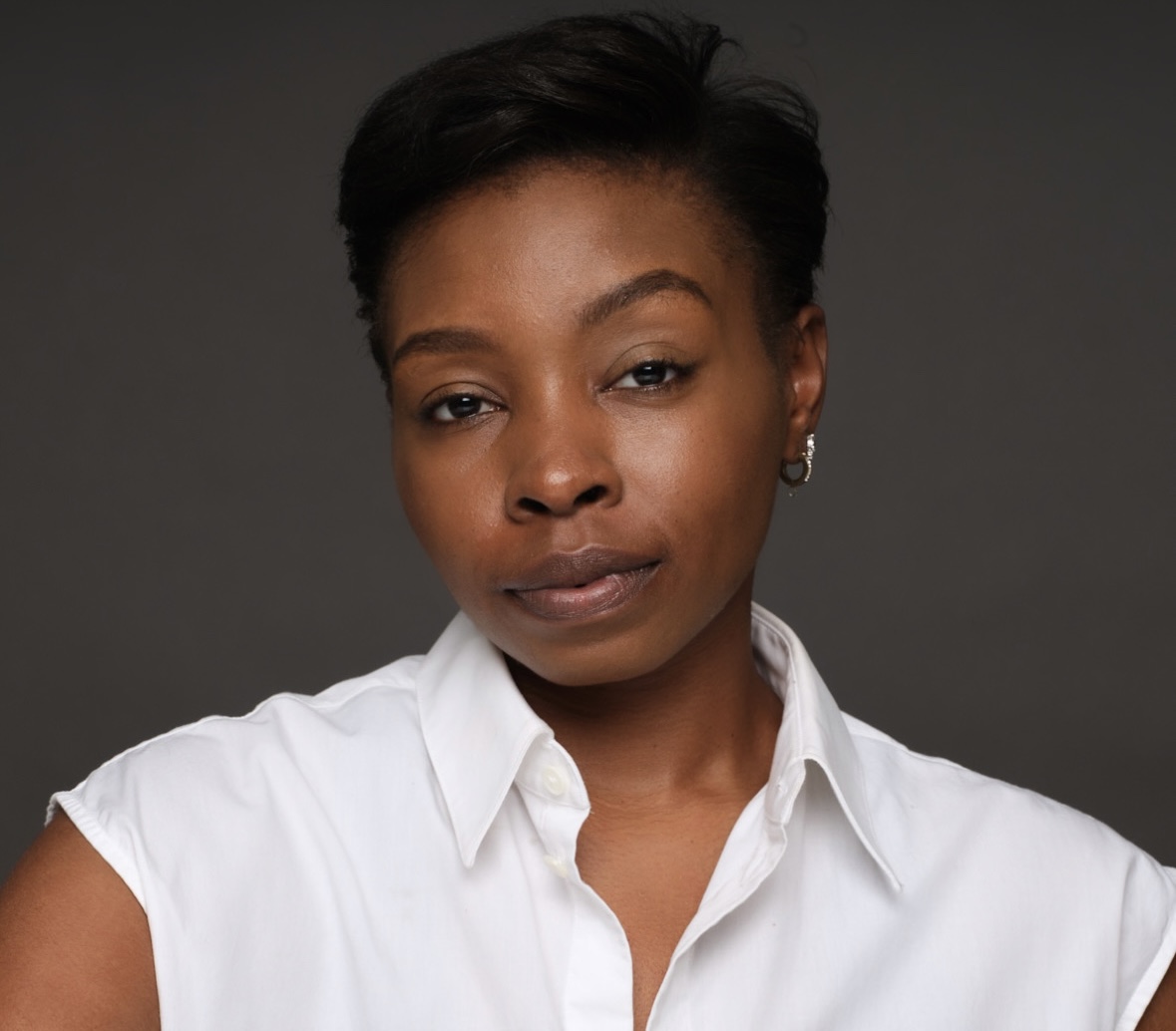
for questions about the fellowship please email the team at
Fellowship@jazzfoundation.org
support our mission
Your donations help us reach more musicians and their families in times of crisis.